

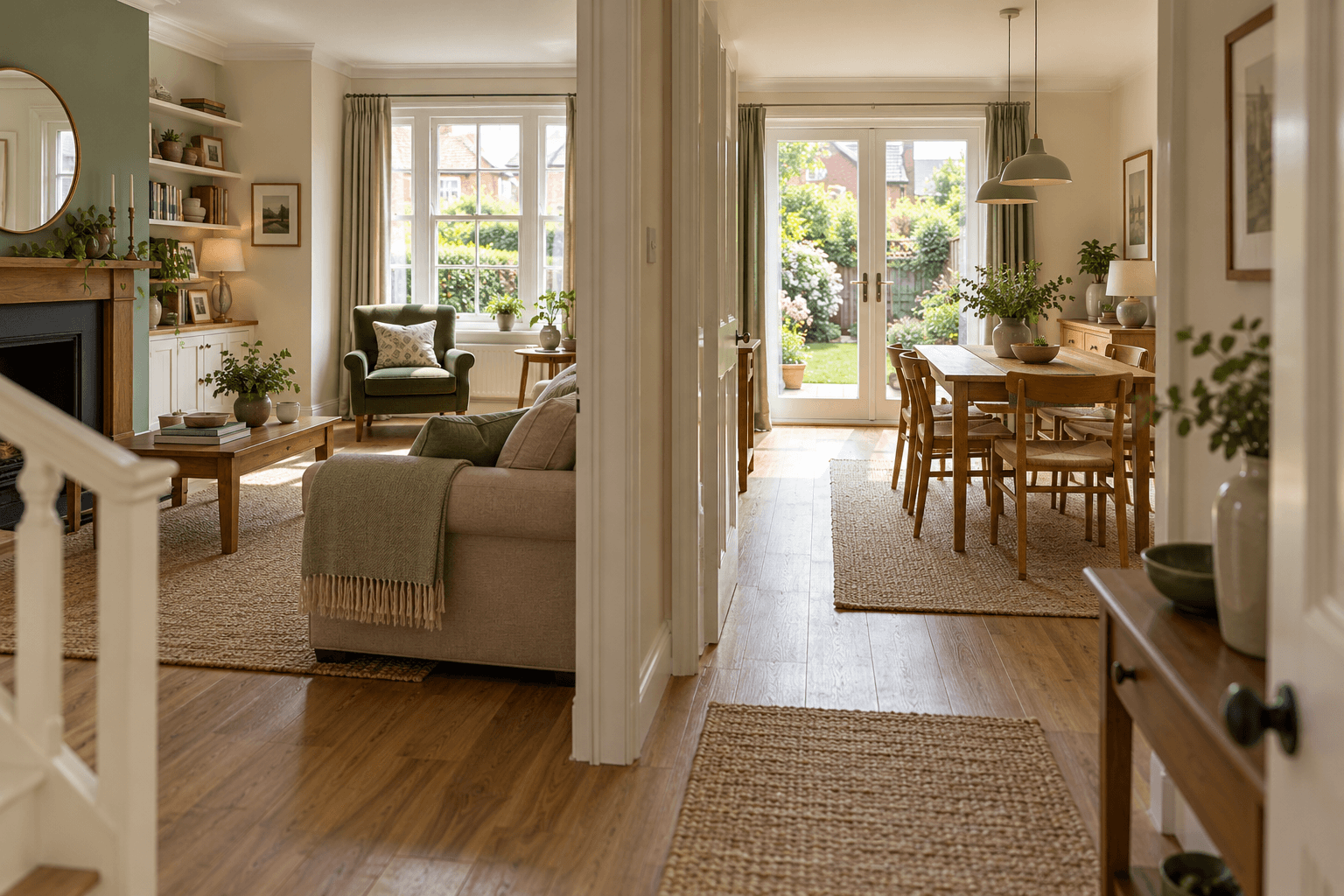
Two homes can have the same number of bedrooms and feel completely different to live in. One may offer useful storage, comfortable shared spaces and somewhere quiet to work. The other may have an impressive room count but leave you wondering where the dining table will go.
When viewing a property, it helps to think beyond the particulars. The question is how comfortably your everyday life would fit inside it.
Walk through an ordinary day
Start at the front door. Where would you leave your coat, shoes and bags? Is there space to bring shopping in without squeezing past furniture? If several people leave home at the same time, could the hallway become a bottleneck?
Then picture the busiest parts of your day. Someone cooking, someone taking a work call and someone watching television may all need different things from the same space. A layout that looks attractive in photographs should also suit the way your household actually lives.
Think about furniture, not just floor space
A room’s measurements are a useful starting point, but doors, windows, radiators and awkward corners affect what fits where. A large room can still have limited options for placing a sofa or wardrobe.
Take measurements of furniture you plan to keep and bring them to a second viewing. Consider space around each piece as well as its footprint. Dining chairs need room to pull out, cupboard doors need to open and walkways need to remain usable.
Decide how much separation you need
Open-plan living can be ideal for spending time together, but it is worth considering noise and privacy. Will cooking sounds interrupt work calls? Is there another room where someone can read or relax quietly?
A separate reception room might become a useful office, playroom or guest space. The right balance depends on your household, so be wary of choosing a layout simply because it looks fashionable.
Check the less glamorous spaces
Storage cupboards, utility areas and practical entrances rarely steal the show in a viewing. They can still make a noticeable difference to daily life.
Think about laundry, cleaning equipment, recycling, bicycles and seasonal belongings. If those things do not have an obvious home, they may end up occupying the space you hoped to enjoy.
Outdoor space deserves the same practical attention. Consider how you reach the garden, where you would sit and how much upkeep you want to take on.
Separate what works now from what you might change
It is easy to imagine removing a wall or turning a small room into something more useful. Treat those ideas as possibilities to investigate, rather than assumptions on which to base your decision. Get appropriate professional advice on feasibility, permissions and cost before relying on alterations.
A useful test is to ask whether the home would still meet your essential needs if you made no changes for the first year.
Looking for a home that fits your everyday life? Speak to Wainwright & Edwards about the spaces and features that matter to you, and arrange viewings with those priorities in mind.